
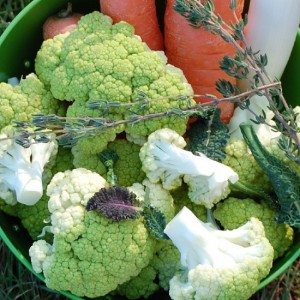
 If it’s January, I must be cooking Broccoflower. I picked some up at the grocery the other day because, frankly, our vegetable larder of turnips, rutabagas, kale, and beets is starting to freak me out. Plus, I can never resist the lime-green color of Broccoflower, and I love its nutty flavor when browned, too. (Also, since we live in a small town and I shop at the same small grocery store every day after my post-office run, I’m beginning to worry that people might think we have a really unhealthy diet, since I rarely buy vegetables at the store any more. Checking out with Roy’s donuts, some Lucky Charms for Libby, and maybe some chocolate chips for me makes me a little self-conscious! Hence the need for the occasional head of Broccoflower.)
I’ve sautéed, roasted, stir-fried and quick-braised Broccoflower, but it’s very cold here today and I thought a ragoût would be satisfying. (When I say it’s cold today, I mean it’s calling-all-mice-inside cold. This morning a mouse was in the compost bowl in the pantry. He’d fallen in, obviously in search of yumminess, but since there was little more than coffee grinds and egg shells to feast on—anything green is going to the chickens or Cocoa Bunny right now—he’d tried to scamper back up the sides of the aluminum bowl. No luck. Roy switched on the light about 6:30 and left the little mouse to do a roller derby around the bowl until I got up. I put him back outside (tipping the bowl to let him escape), where he will most likely find his way straight back inside the house tonight. I feel a little bit like Fred Flintstone putting Dino outside the back door. Oh, well. At least Libby is not here to insist on a warm bed for Mousey.)
 It's that time of year again when everyone is ready to jump onto the get-fit wagon. I could easily say that I should include myself in thatgroup, but I believe it's best to start by taking small steps before diving into a plan that you might not keep up. My first step for the New Year is a healthy one, it's simply to eat more healthy foods, like whole grains and to limit my intake of sugar. I actually love whole grains, but I just don't eat them often enough. Luckily my only downfall sugar-wise is chocolate, so it's easy for me to exclude sweets and candies entirely. But I've recently found myself using agave syrup as my choice of sweetener. That was my first step, what's yours?
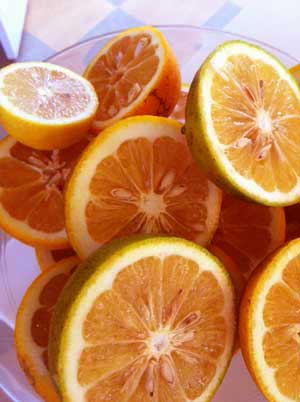 It's winter and time for preserving all the glorious citrus fruit while it's at its peak in the market and I'm lucky to have Seville oranges. I've read about Seville oranges but never have seen them in my market until last week. Well, you imagine my excitement as I tore endless plastic bags from the roll, filling them quickly as the display of oranges disappeared. A Seville orange isn't the nicest looking orange I've every seen but a little sugar and a little heat and I guarantee I will transform them into the prettiest jars in my pantry!
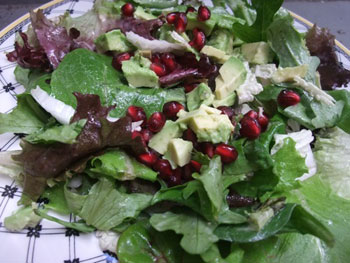 Happy New Year! It's hard after the holidays not to want to take a break from all the indulgence and make sweeping resolutions. My diet resolutions this year are simply to eat more soups and salads. Sure, I'd love to eat healthy, exercise more and lose weight but I'm trying to be realistic.
  I swear I have no idea what has come over me. I have been cranking out loaves in epic proportions. It's almost as if the loaf pans were on the counter and I just kept using them. Okay, that's really what happened.