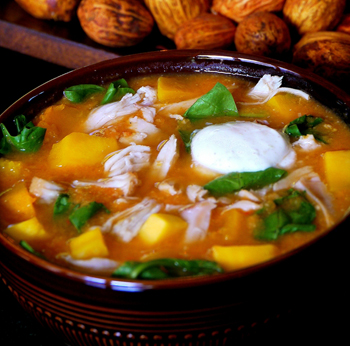
 Lobster season is in high gear. While lobsters are of course most easily available on the east coast and New England, you can get pretty good live lobster now at reputable markets around the US thanks to purveyors who are not (luckily) locavores.
Folks who sell lobsters know that their product is so good that not even a politically correct eater can stay away from them. For those who are part of the extreme locavoreans, indulge yourself, suspend your obsession for just one meal - it will be worth it.
Unfortunately, most of us still prepare and eat lobster the same way we have been taught for generations. The pleasures of boiling the lobster and eating it with drawn butter or with mayo in toasted rolls cannot be underestimated.
Lobster Fra Diablo or lobster with XO sauce are great, but merely variations on a theme. Here's a simple recipe for an appetizer/salad that retains some of the familiar but introduces some nice new twists.
 "This was served at our wedding last year and always delights a crowd, hence the name. Not that we have anything against Billy Idol…. It is fruity, sweet, on the lighter side and can be made more like a cooler if you increase the juice. Frozen fruit is key here as it keeps the drink cold and stops from becoming too mushy in the liquid. Frozen pre-cut fruit works fine or you can do it yourself."
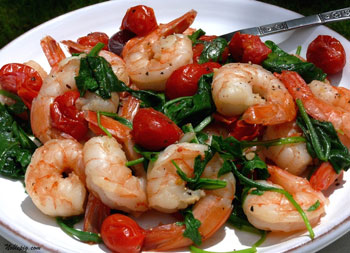 The best thing about this time of year is the abundance of fresh ingredients available at the Farmer's Markets and roadside farm stands. Freshly harvested arugula is widely available right now, which makes me almost giddy, I love it's peppery flavor.
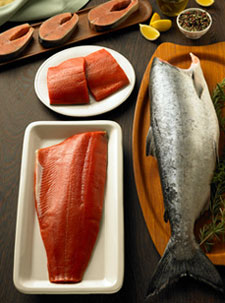 People in Portland, Oregon have salmon on the brain. It is a centuries old, intense love-affair – one that I can easily identify with having grown up in the Bronx where lox was one of the five basic food groups along with pickled herring, pastrami, rye bread and shmalts {or schmaltz} - chicken fat. Everyone from the state’s original people – the Umatilla, Warm Springs, Siletz and Grand Ronde tribes, to the chic tattooed urban dwellers, is salmon obsessed.
 What's this I see? Kids fighting over vegetables? Yes, it's true.