 There is nothing like ordering fresh fish at a sea side tavern in Greece. It’s one of the quintessential experiences when visiting the Greek Isles. My friend Rich Campbell, who has uncanny knack for finding incredible places to eat, introduced me to a wonderful spot in Oia on Santorini called Taverna Katina in the quaint Ammoudi Port.
It’s simple, casual dining at its best. Mrs Katina oversees everything and beams with pride as guests enjoy her authentic Greek dishes. If you visit, be sure to try her tomatokeftedes (tomato balls) – a house specialty.
They offer the freshest fish, which you can choose from the display case inside the restaurant. We opted for local snapper - served whole with simple lemon and olive oil dressing on the side - and it was some of the best I’ve ever had.
If a trip to Greece isn’t in your near future, you can grill fresh snapper in your own backyard. Grilling a whole fish (head and all) delivers a richer, deeper flavor than grilling boneless fillets. If your fish are a little larger (between 1 1/2 and 2 pounds), simply grill them a minute or two longer on each side.
 For the longest time I didn't know what a real taco was. As a kid we ate tacos from the store-bought kit, and on rare occasion we might have fast food tacos from that place with the bell. But the first time I had real tacos was at a popular Mexican restaurant in New York during my college years. It just so happens that those first tacos were fish tacos. Since then they've been my all-time favorite.
 I don’t want to lose weight, stand in line at the gym, or make short-lived resolutions for 2014 - I resolve to live in the moment.
 Generally, on Cinco de Mayo, we go out to one of two of our favorite Mexican restaurants. I grew up going to Casa Vega. It truly is, in my opinion, the best, authentic restaurant in Los Angeles. The enchilada sauce is perfection, the crispy tacos with shredded beef cannot be beat, and the margaritas kick your butt. More importantly, it holds a whole lot of nostalgia for me. Another favorite is Lucy’s Cafe El Adobe. There is really nothing better than their bar-b-q beef tacos!
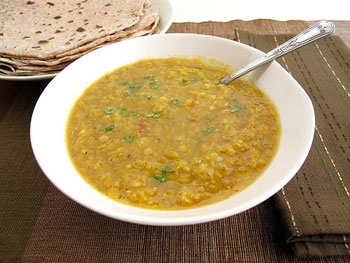 Soups and stews are my favorite dishes during the cold-weather months. Now that the weather has turned chilly and much of the past few weeks have been marked by rain, I am ready to jump into my repertoire of soups and stews. I love meals of chicken soup or beef stew, but I also enjoy vegetarian dishes that are just as filling, nutritious, and comforting. Something with a bit of heat and spice is right up there with the best of soups and stews. That dish for me is Indian dal, a cross between a soup and stew.