
 Home-cooked take out (or homemade take-away as the Brits say). It's an oxymoron, but you know what it means.
There are loads of articles in cooking / health magazines touting the benefits of making your own take out favorites. It's no surprise. At-home take out is more affordable, healthier, and often tastes better.
Without a doubt, my favorite take out food is Chinese and Thai, which unfortunately is usually loaded with sodium and excess fat from oil. So I often make my own Chinese and Thai take out favorites such as this Thai Pineapple Fried Rice.
With a few tweaks, fried rice can easily become a healthier take out dish. In this recipe for Shrimp Brown Fried Rice, brown rice and added veggies boost fiber and complex carbohydrates while reduced sodium soy sauce and unsalted cashews keep sodium levels on check. Boldly flavored toasted sesame oil is more flavorful than regular sesame oil, so less is needed without sacrificing flavor.
So tell me, dear readers, what are your favorite home-cooked take out dishes?
Global Cuisine
Global Cuisine
Cooking Classes Your Way
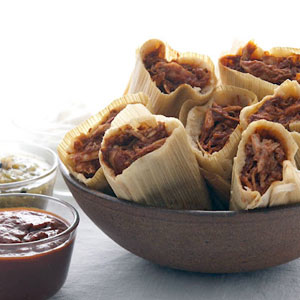 When it comes to cooking the food from another culture, the ingredients and techniques can be unfamiliar. Going to a foreign country and taking a cooking class is great, but not a readily accessible opportunity for most. Fortunately there are local cooking classes and cooking kits.
Recently launched Global Grub offers cooking kits with extremely well written instructions that will help you succeed in making things like sushi, or jerk chicken with coconut rice and beans. I used the tamales kit and was very impressed with the quality of the ingredients, the clear instructions and the wonderful results. My dad said the tamales were the best he'd ever eaten!
Kits include the dry and hard to find ingredients, and range in price from $13.99 up to $19.99 and for every kit purchased, Global Grub donates a meal to someone in need through their local food bank. Global Grub offers tutorial videos on their site, and the instructions with each kit are easily folded into a stand for easy reference as you cook.

Oven Baked Pulled Pork Flautas
 This recipe as a weapon of mass deliciousness. It’s easy to make and serve for a house full of your friends and family.
I have always thought of flautas as a specialty dish, one I would only order at a Mexican restaurant. Somewhere along the line I convinced myself flautas were complicated and I didn’t want to deal with the deep-frying. It’s not that I’m opposed to deep frying, but I knew it would be difficult and time-consuming to fry dozens of flautas for a large gathering.
However, I recently changed my mind and started working on perfecting baked flautas at home. I wanted the meat seasoned properly with traditional Mexican flavors. But most importantly, the flour tortilla had to have the perfect crunch. Anything less wouldn’t be right. I was looking for a flaky texture, similar to the deep-fried flauta.
Currant Scones
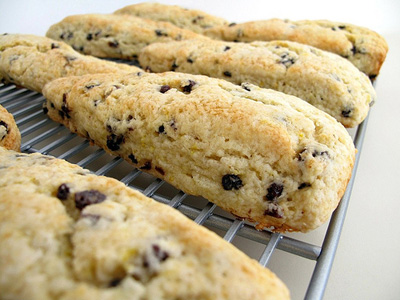 On the quest to bake the perfect scone, I've baked batch after batch of flat, hard, and dry scones. But as the saying goes, the third time's the charm. On my third try I created the fluffiest, most tender, high-rise scone. I have a great love for scones. Some of my best memories have been made while eating scones over tea with friends. I love them spread with clotted cream and jam. I remember the first time I had a scone was at the Orangery in Kensington Gardens in London. A group of us had the full English afternoon tea treatment with cucumber sandwiches, pots of the best tea from India, scones, and other tea cakes.
Typically scones are made plain or with sultanas, which are what the British call raisins. But any dried berry or chopped dried fruit works well. I especially love currants, cranberries, golden raisins, or chopped apricots. Chopped nuts also work well. Spices such as ground cinnamon, ginger, or cardamom lend a festive touch. Lemon or orange zest in the batter adds a nice citrus fragrance. Whatever combination you choose, scones are always well received around the holiday time. They make an ideal offering for whenever family or friends stop by to visit. Best of all they can be whipped together in minutes.
Shu Mai for the New Year
 I love the custom of Chinese dim sum because it brings friends and family together at the table. This style of food is enjoyed with small plates, which allows the diner the opportunity to enjoy many different dishes in small quantities. For me it's a way to find a favorite and stick with it. In every Chinatown in the United States you would be hard pressed not to find a restaurant offering dim sum or what I like to call Chinese brunch. I remember my first time at a dim sum place in New York with a group of Asian friends. I was lucky to have help in deciphering the menus and communicating with the waitresses, who brought out the food on trolleys and took orders by stamping slips of paper. It's truly an experience that transports the nonnative eater to China.
It's been many years since I've had good traditional dim sum and my longing for dumplings has increasingly grown since. With the arrival of Chinese New Year, there is no better reason to make my dim sum favorite, shu mai, at home. These dumplings are typically made of shrimp and pork, but they can also be made of pork and mushroom, and even mutton, depending on the regional cuisine. No matter the filling, shu mai always retain a characteristic look: they sort of resemble little volcanoes with filling erupting from their tops. They only need limited skill to form the shape and the best shortcut of all is using wonton wrappers instead of making the dough. It takes just minutes to bring together this easy dim sum, which also makes a fun party appetizer.
More Articles ...
Check out--
-
Turkey-Butternut Tortilla Soup with Zesty Lime Sour Cream
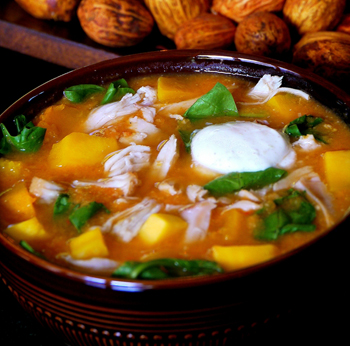
For the soup:
3 cups cooked turkey, shredded
1 butternut squash
1¼ cups onion
1 cup corn
4 garlic cloves
1 jalapeno
3 Tablespoons olive oil
3 corn tortillas
2 cups tomatoes
3 Tablespoons tomato paste
1 Tablespoon ground cumin
6 cups chicken broth
6 ounces spinach
Salt and pepper to tasteFor the sour cream:
½ cup sour cream
1 Tablespoon lime juice
Zest of one lime
¼ teaspoon ground cumin
Welcome to the new One for the Table ...
Our Home Page will be different each time you arrive.
We're sure you'll find something to pique your interest...