Spring

easyasparahusWhile I wait (and wait) for our local asparagus, it occurs to me that everyone else is not waiting. The grocery stores are full of asparagus (from elsewhere, wherever that is) and it is hard to walk down the produce aisles without snatching up a bunch. I understand, really I do, and that is probably why my two blogs on asparagus from last year are getting hit up a lot these days. So okay, I can’t be my stubborn self and wait another month to offer up more asparagus recipes. Especially because there are about a gazillion different ways to cook asparagus—almost all of them pretty darn quick—so I can come back to this provocative vegetable again. Soon.

While I love quick-braising and sautéing asparagus, I think the method that may be the absolute speediest may offer up some of the best flavor, too. It’s stir-frying. Two to three minutes, and you’ve got a beguiling roasty-toasty flavor and a nice crisp-tender texture. A few keys here: Slice the asparagus thinly on the bias for the best browning; don’t use a lot of fat; keep the heat cranked up. (I love the bowl shape of my non-stick stir-fry pan, but you can substitute with a nonstick skillet—just stir more frequently.)

I like to include a bit of garlic, some sliced scallions or shallots (as in the recipe below), or a combo of ginger and garlic in an asparagus stir-fry—but not much more. I don’t make a finishing pan sauce for it, in order to let that pure flavor shine through. (I do, however, sometimes like a cool, creamy garnish for this dish—crème frâiche is lovely.)

Read more ...

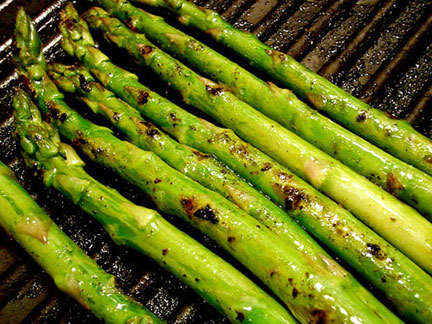
asparagusquiche.jpg One of the first signs that spring has arrived is the availability of bright green vegetables, like asparagus. There is something special about an asparagus spear emerging from the ground. Right now asparagus is available at the Union square Greenmarket. In the supermarket it's available all-year round, but the best time to get pencil-thin asparagus is during springtime. It's at its most tender and succulent. Steamed for a few minutes, roasted, or grilled, asparagus is a delightful vegetable prepared in any which way. Its color becomes vivid green after cooking and for me that represents the essence of spring.

I enjoy eating asparagus in many forms, but I like it most in quiche, one of the favorite brunch foods here in the States. Though the French even eat it for lunch or dinner. Quiche was originally meant just for breakfast in the French province of Lorraine, from where it originated. Surprisingly the tradition of quiche-making comes from a time when Lorraine belonged to Germany. The dish used to be called kuchen, which is German for cake, and instead of a pie crust, it was made with bread dough—basically a pizza. Once the region changed rule, the German name was eventually transliterated into French and the recipe changed too. The most well-known recipe is Quiche Lorraine, filled with just bacon.

Read more ...

clamsparsley.jpgAt the Wednesday Santa Monica Farmers’ Market — two blocks from the Pacific Ocean — we’re finding one of the treasures of spring: green garlic, thick as a leek and two feet long.

With fresh green garlic, everything is edible except for the outermost skin. The farmer I buy them from swears that even the roots are edible. With some trepidation I nibble on a root strand and am pleasantly surprised that it has heat and an intense garlic flavor.

Next to the stand with the green garlic is Carlsbad Aqua Farm where we buy our fresh mussels, oysters, clams, and scallops. The idea was obvious to me: green garlic and clams.

Read more ...

hazelnutasparagus003.jpg I get excited when I see fresh asparagus standing tall in the produce department at the grocery store. It tells me spring is almost here. Although fresh-from-the-garden asparagus probably won't be available around here until sometime in June, I know that when spring hits the produce department it won't be long before we actually feel that season in northern Minnesota. Now, that's something to celebrate.

I've been blanching, steaming, sauteeing and roasting asparagus for the last week. I've discovered I love having blanched asparagus in the refrigerator. I can grab a spear and nibble on it just the way it is or dab it into some of the roasted red pepper and garlic hummus that I whip together in my food processor and store in the refrigerator for a healthful snack.

Asparagus with Hazelnut Crumble is a quick-to-make dish that takes advantage of blanched asparagus. On a recent evening I melted some butter in a saute pan. When it was hot, I added some minced shallot (because I had some in my little garlic basket on the counter) and cooked it just until tender. Then, I added blanched asparagus spears and kept shaking the pan back and forth so that the spears would be totally coated with butter.

Read more ...

favabeans.jpgFinally, the wait is over! Fava beans are in season. They appeared for the first time last Sunday, and I couldn't be happier. I know how hard the wait has been on you too, but you can rest easy now. Well don't rest too easily. Fava beans have a depressingly short season--usually just 4-5 weeks in April-May.

Fava (FAH vah) beans, like artichokes, asparagus, and English peas are a hallmark of spring time produce. These meaty, chewy legumes are exceptionally flavorful; they're similar in taste to edamame and have the firm texture of lima/butter beans. In general, the larger the pod, the better the bean. So when you see them, buy them, even if they're $3.00-4.00/pound. You won't be disappointed.

And don't worry about what to call them. According to Wiki and Cook's Thesaurus, you're correct if you say Vicia faba, broad bean, butter bean, faba bean, English bean, field bean, horse bean, tic bean, or Winsdor bean. I'm not making this up. I think someone actually wrote a dissertation entitled "The Many Appellations of the Bean, Fava."

So call 'em whatever you want, just don't miss them. And follow these instructions for shelling. They take a little effort because you have to shell them twice, but trust me, they're worth it.

Read more ...