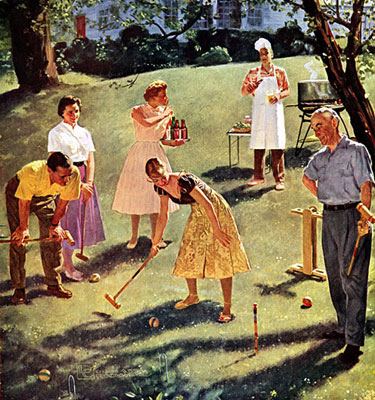
 I cannot trace the exact moment, but somehow we started off on the wrong foot. And like a big wave, our discontent swelled over time, neither of us knowing the origin of it. We had both dug our heels in the sand.
When my sister-in-law, Kris, turned the big 4-0, my brother threw her a party. A really big one. Kris had always been a fan of Rita Coolidge, so naturally, Alan booked Rita for a private concert to honor his wife. He went all out.
As the big day approached, my one-day-to-be-husband urged, “You should really get along with Kris.” I agreed. I thought it was time to bury the hatchet.
So I did.
I went to a hardware store and bought a hatchet. I also purchased a beautiful gift bag that I filled with sand. Actually, cat litter. Where else can you get sand? And I buried that hatchet.
 This fall I took a night train ride from Buffalo, New York to Chicago, Illinois. Normally, I find the train relaxing, a chance to rest, read and reflect. On this trip, however, I just wanted to sleep. But the guy sitting behind me snored so loudly that even the usually soothing train sounds couldn’t drown out his volcanic eruptions.