 Summer is my least favorite season. I am a ghostly pale person, I sweat easily, and I do not garden successfully. I am allergic to chlorine and can’t spend days by the pool without breaking out in hives, and I am not generally given to hiking, camping, kayaking or doing any of those other things that involve being outside, sweating, and getting burned. I complain a lot about the heat, which may explain why I often find myself alone in my air conditioned house drinking iced tea and reading.
Today, though, today it was 80 degrees after an interminable and bitterly cold winter. Stepping outside tentatively in my cotton skirt and flip flops, I was overwhelmed by sense memories, good ones, the kind that made me sit down on the peeling porch steps and savor them. As the hair at the back of my neck coiled inexorably into ringlets, and the warm air extended its seductive fingers to touch parts of me that have not been unwrapped in public for five months, it seemed that maybe I didn’t hate summer any more.
I remembered all of the Only Summer things, the Farmer’s Market on Sunday morning, bags full of vegetable love in the form of tiny Patty Pan squash, gritty zucchini, scallions with shining white bulbs, garlic scapes, baby eggplants, tiny and fiery Hmong peppers, and the tomatoes, oh Lord the tomatoes in their juicy, flashy glory.
 When I have a party, I try to invite everyone. I really do. And if my best friend has another best friend, I invite the other best friend. I include the world. If I happen to run in to you (random person reading this) a week before said party, I will invite you even if we’re not the best of friends. I even like it when people crash my parties or when someone calls me and says boldly “Do you mind? I hear you’re having a party and I’d really like to go.” What I LOVE about that is that the person who makes that kind of call, does know me. They know, I’m so happy to include everyone.
 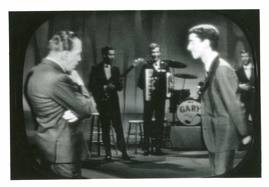 Back in the days when evening television was interactive family entertainment, when Ed Sullivan and "College Bowl" were on, my family used to gather in the TV room. In our house, that was the bar. It had a Fleetwood television built into the wall, with the controls built in next to the silk-covered sofa on which my mother would always lie, on her back, her head propped up by four pillows.
 My relationship with my mother was, um, complicated. She was a kid herself in many ways, having been neglected by her own beautiful but narcissistic mother. She pretty much raised herself and from my jaundiced teenage perspective, my mother was a disgrace. She wanted romance and adventure and was frustrated by the mundane tomb of her obligations. Never mind the fact that she’d been a parent since the age of 19 with 4 kids.
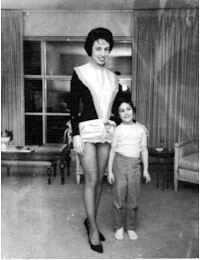 My mother’s name is Gladys, and the name just doesn’t fit her.
 My late grandmother, may she rest in peace, was very, very good at the things she was good at, and spectacularly bad at the thing she was bad at, which was cooking.
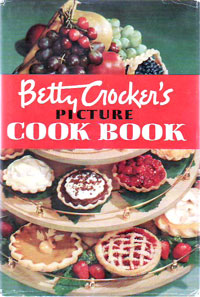 As Mother's Day quickly approaches, I am reminded of the many reasons I love my mother. She is smart, kind, funny and she makes one hell of a good Hershey Bar Cake - you see, I grew up with Betty Crocker.
 Like a mother hen sweetly teaching their young how to find the water and food bowl is the way our Mother taught us how to appreciate the world of wonderful food that awaited us at a very young age. We were on our first trip to Europe, I was 6 and my sister was 11 when my mother became very ill in Paris. We were staying in the 5th Arrondissement at the Lutetia Hotel and as my mother faded in and out of consciousness she was worried that we needed to eat. She gave us money and told us that we weren’t allowed to – #1 not cross any streets and #2 we had to hold each other’s hands. We could eat what ever we wanted and we were armed with plenty of francs.
 My mother happily referred to herself as a “good eater.” Although she was very petite, she could out-eat even our teenaged sons. Every year for Mother’s Day the Southern California branch of the family would drive to Little Saigon in Westminster and eat at Dong Khanh, where my mom ordered her favorites: lemon grass chicken, lobster in black pepper sauce, chow mein noodles with squid, vermicelli with bbq pork, spring rolls and a large bowl of pho ga — chicken vermicelli soup.
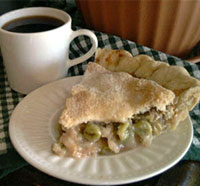 Gooseberries have nothing to do with geese. The berries are bigger than a pea, smaller than a marble and are pale green or ruby red, depending on the variety. Wear gloves when you pick them. The bushes are covered with thorns. I dare you to eat one raw without making a face. They are beyond tart.
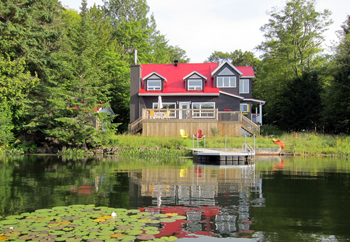 I’m a looky-loo. I real estate dream shop online, a lot!!!! Late one night when my husband was safely sleeping, I forwarded a photo of a house on a lake I had found and the subject said, “Lets buy this instead of doing an addition to our house. It’s MUCH cheaper.”
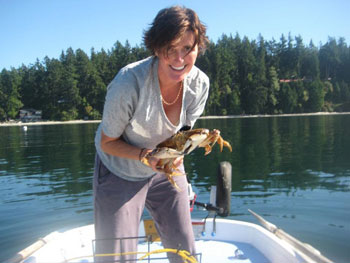 When I am at my home on Orcas Island, Washington and away from the concrete jungle of Los Angeles, I morph from a well dressed city slicker to a somewhat cave-like hunter and forager.