Since it's Christmas time, I chose to make Anita Chu's Sugar Plums recipe. Anita writes in her Field Guide to Candy, "When visions of sugarplums dance in children's heads, it would be interesting to know exactly what sugarplums they dream of." She explains that historically "sugarplums," referred to a wide variety of candies, but more recently have come to refer to "soft, sticky balls of dried fruits and nuts, often rolled in shredded coconut or confectioners' sugar. They do not necessarily contain plums."
According to Anita, "Sugarplums were immortalized in Clement Clarke Moore's poem "A Visit from St. Nicolas" and "Tchaikovsky's Sugar Plum Fairy in the Nutcracker." Hence our association of sugarplums with Christmas.
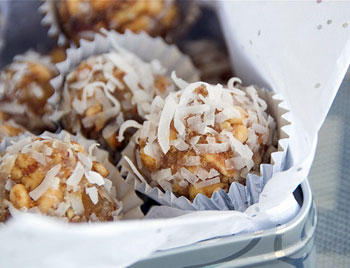 Sugarplums
(Recipe from Field Guide to Candy by Anita Chu; Quirk Books, 2009)
2 cups almonds, toasted and roughly chopped
1 cup dried apricots
1 cup pitted dates
1 teaspoon ground cinnamon
2 teaspoons grated orange zest
2 tablespoons orange juice
1 tablespoon honey
Unsweetened flaked coconut for rolling
Line a baking sheet with parchment or wax paper.
Combine almonds, apricots, dates, cinnamon, and zest in a food processor and process into a finely ground mixture. Add orange juice and honey, and combine until the mixture becomes a sticky ball.
Pinch off pieces of the mixture and form into 1-inch balls. Roll in coconut. Place on the baking sheet for about 1 hour until firm.
Notes: You can substitute the fruits and nuts in this recipe. Dried cherries, figs, or raisins work well, as would hazelnuts, pistachios, or pecans. Try adding chopped candied ginger or candied citrus peel.
 Latkes, also known as potato pancakes, are a traditional treat to eat at least once during the eight days of Hanukkah. The reason you eat latkes for Hanukkah is because they are fried in oil. Why oil? Hanukkah celebrates the re-dedication of the second temple after a battle and along with the victory came the miracle in which mere drops of oil in an oil lamp lasted eight days. The "miracle" is much like a story about a fat man coming down a chimney with presents...
 More than twenty years ago, when my Auntie Elinor was living in Riverside, Illinois, she began sending me the special holiday cookbook that her local
newspaper published. It was packed with all kinds of recipes that
readers had shared. I always loved reading through its pages.
More than twenty years ago, when my Auntie Elinor was living in Riverside, Illinois, she began sending me the special holiday cookbook that her local
newspaper published. It was packed with all kinds of recipes that
readers had shared. I always loved reading through its pages.
 The American media warns us at every turn that Christmas is a time of over-indulgence. Women’s magazines sprout articles about how to avoid the buffet table, not to mention an extra ten pounds. Readers flip quickly past that article to the one depicting how to decorate a sugar cookie.
 Thanksgiving is next week. I am in amazement as to how quickly this year flew by. Last year at this time I was starting to clean out our pantry in preparation for experimenting with a gluten free diet. That experiment turned into a way of life and everyone in our home has greatly benefited from it.